
When a Small AC Drip Becomes a Bigger Concern
Finding water dripping from your indoor AC unit can be worrying. You may first notice a wet patch on the wall, drops falling from the front panel, or water collecting on the floor below the unit. In some cases, the leakage begins slowly and increases as the air conditioner continues to run. An AC leaking water inside is usually a sign that condensation is not draining correctly. The problem may come from a blocked drain line, dirty filter, a frozen evaporator coil, a damaged drain tray, or incorrect installation. Dubai’s warm and humid conditions can increase the amount of condensation produced, making an existing drainage problem more noticeable.
Although a few drops may not appear serious, ongoing leakage can damage paint, ceilings, furniture, and electrical components. Switching off the unit and investigating the cause early can help prevent the problem from becoming more expensive. In this blog, we will explain why indoor AC water leakage happens, the risks of ignoring it, what you can safely check, and how technicians diagnose and repair the problem.
Is Water Formation Inside an AC Normal?
Moisture formation is a normal part of the air-conditioning process. When warm indoor air passes over the cold evaporator coil, moisture condenses into water. This water should fall into a drain tray and leave the property through a condensate drain pipe. The problem begins when the water cannot follow its intended drainage path.
A blockage, damaged tray, frozen coil or disconnected pipe can cause moisture to overflow into the room. Therefore, condensation itself is normal, but visible water dripping from the indoor unit is not. It indicates that something within the drainage or cooling system needs attention.
01
The Condensate Drain Line Is Blocked
A blocked drain line is one of the most frequent reasons for water leaking from an indoor AC unit. Dust, dirt, algae, and other debris can gradually collect inside the pipe and restrict the flow of water. As the blockage becomes worse, condensation backs up into the drain tray. Once the tray becomes full, water begins overflowing from the indoor unit or the surrounding ceiling area.
Possible signs of a blocked drain include:
- Water dripping after the AC has been running for some time
- A damp or musty smell near the indoor unit
- Water is collecting in the drain tray
- Moisture appearing around a concealed ceiling unit
- Little or no water is leaving the external drain outlet
Clearing the visible end of the pipe may not remove a deeper blockage. Professional drainage cleaning may be required to clear the complete line without damaging its connections.
02
The AC Has a Refrigerant Problem
Low refrigerant does not directly create water, but it can reduce pressure within the cooling system and cause the evaporator coil to freeze. When that ice melts, the resulting water may overwhelm the drain tray.
Other possible signs of a refrigerant-related problem include:
- Poor or inconsistent cooling
- Longer operating cycles
- Ice on the copper refrigerant pipe
- Hissing sounds near the indoor or outdoor unit
- The room remained warm despite a low temperature setting
Adding refrigerant without locating a possible leak may provide only a temporary improvement. The system should be pressure-tested and inspected so the actual cause can be identified.
03
Dirty Filters Are Restricting Airflow
A clogged air filter reduces the amount of warm air passing over the evaporator coil. Without sufficient airflow, the coil can become excessively cold and begin developing ice. The water may temporarily stop while the ice is forming. However, when the AC is switched off or the ice begins to melt, the drain tray can receive more water.
This may result in sudden dripping or a larger amount of water leaking from the unit. Check accessible filters for dust and clean them according to the manufacturer’s instructions. If the filter becomes dirty again very quickly, the indoor unit or the surrounding environment may require inspection.
04
The Evaporator Coil Has Frozen
A frozen evaporator coil can result from several underlying problems, including restricted airflow, low refrigerant, and heavy dirt on the coil. Ice may appear on the indoor coil, copper pipe, or nearby components. Once the ice melts, water can overflow from the drain tray or escape from areas not designed to handle condensation.
If you notice ice, switch off the cooling function and allow the unit to defrost naturally. Do not scrape the coil or pour hot water over it. These actions can damage delicate fins, pipes, and internal components. Freezing that returns after filter cleaning normally requires technical diagnosis.
05
The Drain Tray Is Cracked or Damaged
The drain tray sits beneath the evaporator coil and collects condensation. Over time, it may become cracked, corroded, loose or misaligned. A damaged tray can leak even when the drain pipe is completely clear. This problem is more likely in older units or systems that have experienced repeated drainage blockages.
Standing water can weaken the tray, while previous repair work may leave it incorrectly positioned. A technician will need to determine whether the tray can be resealed, repositioned or replaced. Simply clearing the drain line will not resolve leakage.
06
The Drain Pipe Is Loose or Disconnected
A condensate pipe can become loose because of movement, vibration, poor installation, or damage during nearby ceiling and maintenance work. Water may then leak from the connection before it reaches the external outlet. In concealed AC systems, a disconnected pipe can release water above the ceiling.
The first visible warning may be a damp patch, discoloured paint, or water dripping from a light fitting. Leakage near lights, sockets, or electrical wiring should be treated as urgent. Switch the AC off and avoid touching wet electrical fixtures.
07
The Condensate Pump Is Not Working
Some AC installations rely on a condensate pump to move collected water to a suitable drainage point. If the pump stops working, water can accumulate until the container or tray overflows. The pump may fail because of an electrical issue, a blocked tube, a damaged float switch, or a worn internal component. You may hear unusual noise from the pump, or it may remain completely silent while water collects.
Testing or replacing a condensate pump involves electrical and drainage components. It should be handled by someone familiar with the system’s operating requirements.
08
The Copper Pipe Insulation Is Damaged
Cold refrigerant pipes are normally covered with insulation. If this insulation becomes damaged, loose or incomplete, warm and humid air can contact the cold pipe surface and create condensation. The resulting moisture may drip from the pipe and appear to be coming from the AC unit.
This type of leakage is sometimes called pipe sweating. A technician can inspect the insulation and determine whether it needs resealing or replacement. The full pipe should be covered correctly, especially around bends and connection points where gaps commonly develop.
09
The Indoor Unit Was Installed Incorrectly
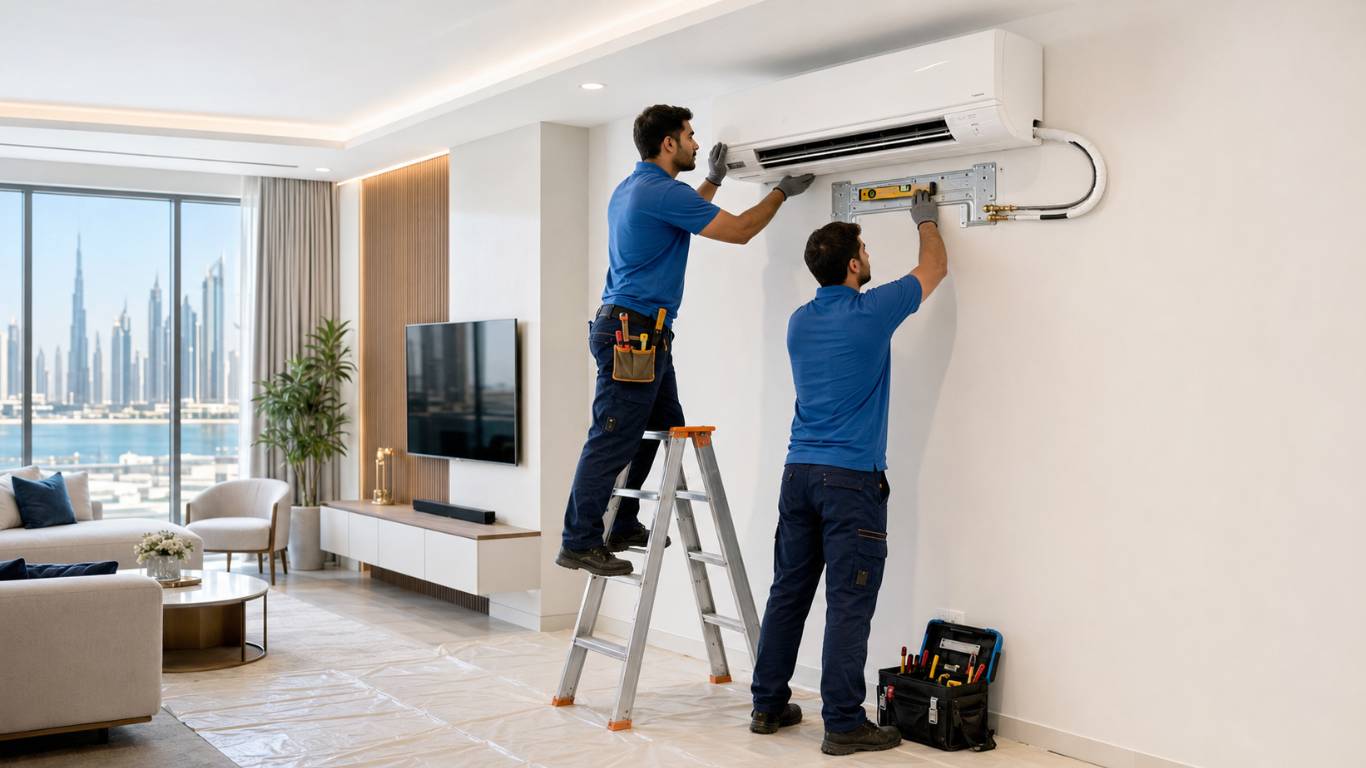
A split AC indoor unit needs to be positioned correctly so condensation can flow toward the drainage outlet. If the unit is tilted in the wrong direction, water may collect on one side of the tray and eventually overflow. Drainage can also be affected when the pipe does not have a suitable downward slope.
Water may remain inside the line instead of flowing away naturally. Installation-related leakage often begins soon after a new unit is fitted or moved. However, vibration and loose mounting points may also affect an older installation.
10
High Humidity Is Increasing Condensation
Dubai’s humidity can cause air conditioners to remove a significant amount of moisture from indoor air. A properly working drainage system should handle this water, but heavy condensation can expose an existing blockage, weak connection or damaged tray.
Frequently opened doors and windows can introduce additional warm, humid air. This makes the AC work harder and increases the amount of moisture produced. High humidity is rarely the only reason water enters the room. It normally reveals another weakness in the drainage system that needs cleaning, adjustment or repair.
What Should You Do Immediately?
If water begins dripping from the indoor unit, take a few careful steps to reduce the risk of property damage:
- Switch off the AC from the controller.
- Turn off the relevant power supply if water is near electrical points.
- Move furniture, electronics, and valuables away from the area.
- Place a container or absorbent towels beneath the leak.
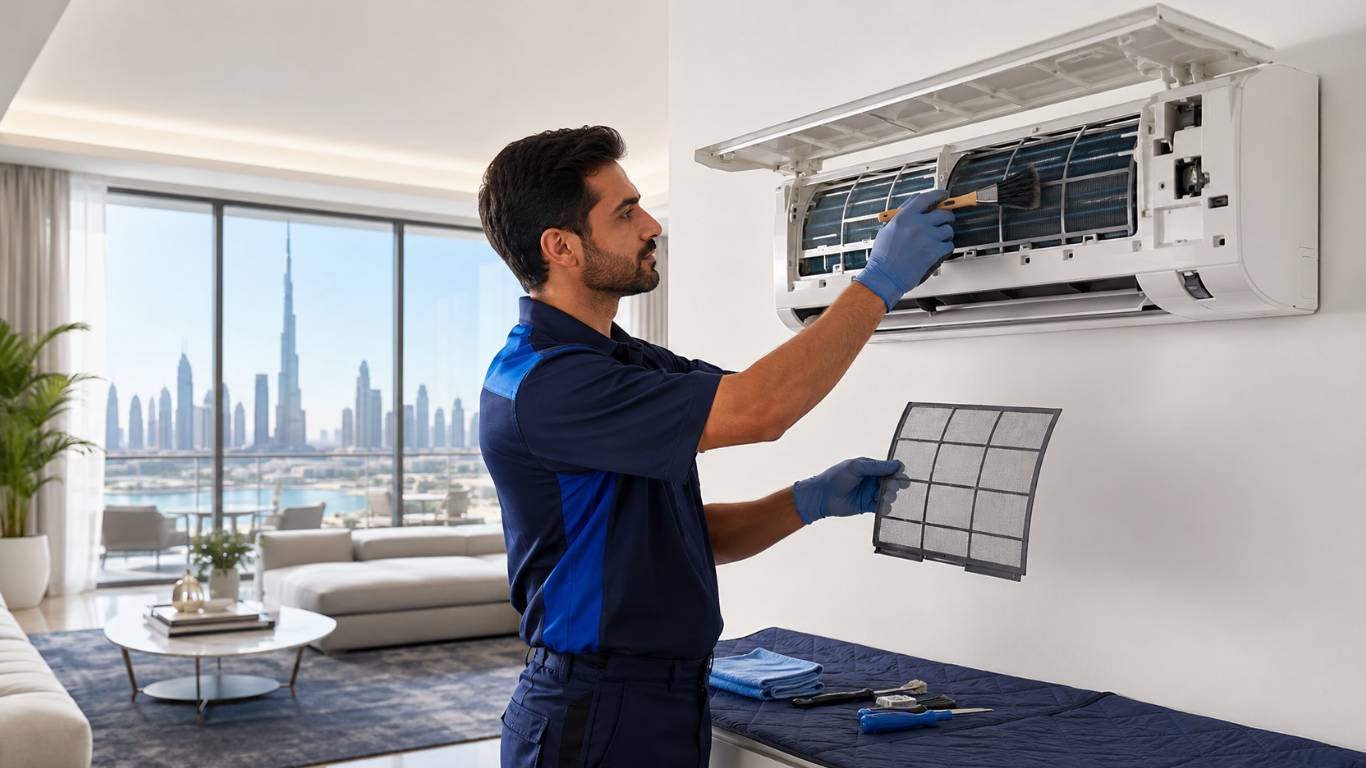
- Check the accessible filter for heavy dust.
- Look for visible ice without opening the unit.
Avoid repeatedly switching the AC back on to see whether the leak has stopped. If the drain tray is already full, continued operation may release more water into the room.

What Damage Can an AC Water Leak Cause?
A slow leak can cause damage before it becomes easily visible. Water may travel behind paint, along a ceiling panel or through insulation before dripping into the room.
Leakage from a concealed unit can be particularly difficult to detect. Regularly inspect ceilings and access panels for damp patches, discolouration and unusual odours.
When Does the Leak Need Urgent Attention?
Not every water leak is an emergency, but some situations require immediate action. Switch off the unit and arrange inspection if water is entering a light fitting, socket or electrical panel. The same applies if the leakage is heavy, the circuit breaker trips or you notice a burning smell.
You should also request AC water leakage repair if the problem returns after cleaning the filter, water is coming through the ceiling or ice repeatedly develops on the coil. Delaying inspection may allow a small drainage fault to damage the AC unit and the surrounding property.
How Do Technicians Find the Source of the Leak?
A professional inspection should follow the water back to its source instead of only drying the visible area. Depending on the installation, the technician may:
- Check the filter and evaporator coil
- Inspect the drain tray for cracks
- Clear and test the condensate pipe
- Examine pipe connections and slope
- Check for coil freezing
- Test the fan, pump, and relevant electrical parts
- Inspect refrigerant pressure when required
- Review the indoor unit’s alignment
Water may travel away from the original fault before it becomes visible. Careful testing is therefore important, particularly for ducted or ceiling-mounted units.
How Can Future Water Leakage Be Prevented?
Regular maintenance is the most practical way to reduce drainage problems. Filters should be cleaned before they become heavily blocked, while drain lines and trays should be inspected for dirt and standing water. Keep doors and windows closed while the AC is operating to reduce the entry of humid outdoor air.
Pay attention to reduced cooling, weak airflow and musty smells because these can appear before visible leakage begins. If the unit has leaked previously, ask the technician to inspect the complete drainage route rather than only the area where the water appeared.
Protect Your AC and Property From Water Damage
Water dripping from an air conditioner is not something that should be ignored. The cause may be a clogged drain line or dirty filter, but it could also involve a frozen coil, refrigerant problem, damaged tray, faulty pump or incorrect installation.
AtoZ Appliances Repair provides professional appliance repair services in Dubai for homes and commercial properties. Timely inspection can identify the source of the leakage, protect the surrounding area, and help restore safe, reliable AC operation.