
Dubai’s Climate Keeps Your AC Working Overtime
Air conditioning is not an occasional luxury in Dubai. It is an essential system that may operate for many hours every day, particularly during the warmer months. This continuous use exposes filters, coils, drainage pipes, fan motors, and outdoor units to dust, heat, humidity, and gradual wear. Many AC problems do not begin with a sudden breakdown. Cooling performance may slowly decrease, airflow can become weaker, or electricity consumption may rise over time.
Because these changes happen gradually, they are easy to overlook until the room no longer cools properly. Understanding how often you should service your AC in Dubai depends on the property, unit type, operating hours, and indoor environment. A system used continuously in a busy villa or commercial property may require more frequent attention than a unit used occasionally in a small apartment. In this blog, we will explain the recommended AC maintenance frequency, what a professional service should include, signs that you should not wait for the next scheduled visit, and practical ways to maintain cooling performance.
Is Water Formation Inside an AC Normal?
Most residential air conditioners in Dubai should receive professional maintenance at least twice a year, while heavily used systems may require servicing every three to four months. Homeowners should clean accessible filters every two to four weeks, inspect vents and airflow monthly, and regularly check for leaks, ice buildup, unusual noises, or reduced cooling performance.
A detailed pre-summer inspection is recommended once a year to prepare the system for peak temperatures, while air ducts and indoor air quality should be checked as needed based on dust levels and airflow. Commercial AC systems generally require monthly inspections with scheduled professional servicing. These recommendations should be adjusted according to the manufacturer’s guidelines, the unit’s condition, and its operating environment.
Why Is Regular AC Servicing Important in Dubai?
Dubai’s climate creates demanding operating conditions for air-conditioning systems. Outdoor units are exposed to dust and high temperatures, while indoor units collect fine particles from everyday air circulation. As dirt builds up, the unit must work harder to move air and remove heat. Longer operating cycles can place additional pressure on motors, capacitors, compressors, and electrical connections.
Regular servicing helps identify issues such as:
- Dirty filters and coils
- Partially blocked drain lines
- Loose electrical connections
- Weak fan motors
- Worn capacitors
- Refrigerant-related problems
- Damaged pipe insulation
- Inconsistent thermostat readings
Finding these issues early may prevent sudden cooling failure during periods when the AC is needed most.
How Often Should Apartment AC Units Be Serviced?
An apartment AC used daily should generally receive professional servicing every three to six months. The exact frequency depends on how long the unit runs, the amount of indoor dust, and whether the property uses split, ducted, or central air conditioning. Filters may need cleaning every two to four weeks during heavy use.
Apartments with pets, frequent cooking, or nearby construction may experience faster dust build-up. Residents should also inspect accessible vents and listen for changes in operating sound. If airflow becomes weaker or the unit takes longer to cool the room, maintenance may be required before the next planned appointment.
How Often Should Villa AC Systems Be Serviced?
Villas commonly have multiple AC units, larger cooling areas, and more outdoor equipment. They may also have long duct routes, several thermostats, and rooms that are used at different times. Routine maintenance every three to four months may be appropriate when the systems operate daily. A full inspection before summer can help confirm that indoor units, outdoor units, drainage lines, and controls are prepared for increased demand.
Maintenance should not focus only on the most frequently used rooms. A guest-room AC that remains switched off for long periods can still collect dust, develop drainage issues or produce unpleasant smells when reactivated. Maintaining a written schedule for each unit can help prevent one system from being overlooked.
What About Offices and Commercial Properties?
Commercial AC systems often operate for longer hours and serve more occupants than residential units. Offices, shops, restaurants, salons, and other businesses may also generate additional heat, dust, or moisture. Filters and visible operating conditions should be checked monthly. Professional servicing may be needed quarterly or according to a planned maintenance schedule.
Commercial properties should pay particular attention to:
- Uneven temperatures across different areas
- Weak airflow during busy hours
- Unusual smells affecting customers or staff
- Water leakage above ceilings
- Increasing energy consumption
- AC units are switching on and off repeatedly
A cooling breakdown can interrupt business activities, so preventive inspection is generally more practical than waiting for a complete system failure.
What Does Professional AC Maintenance Include?
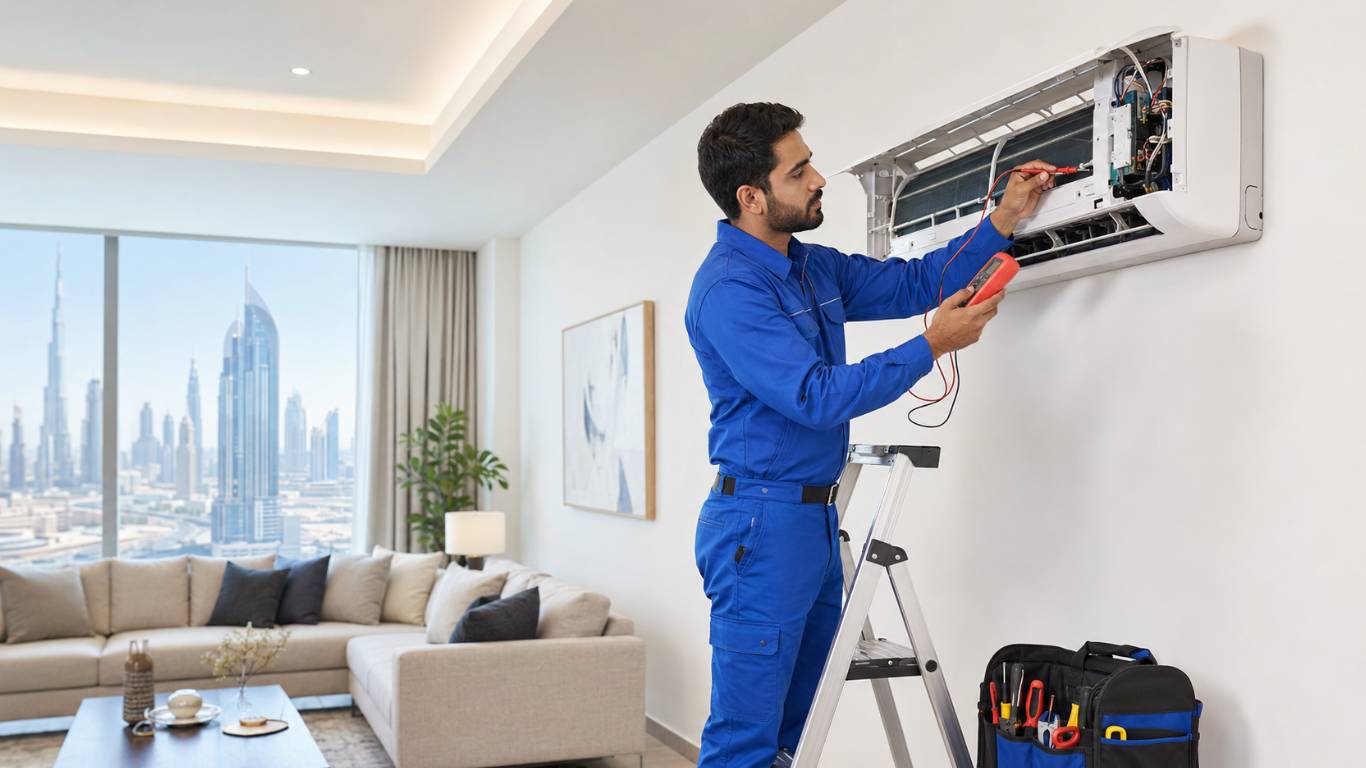
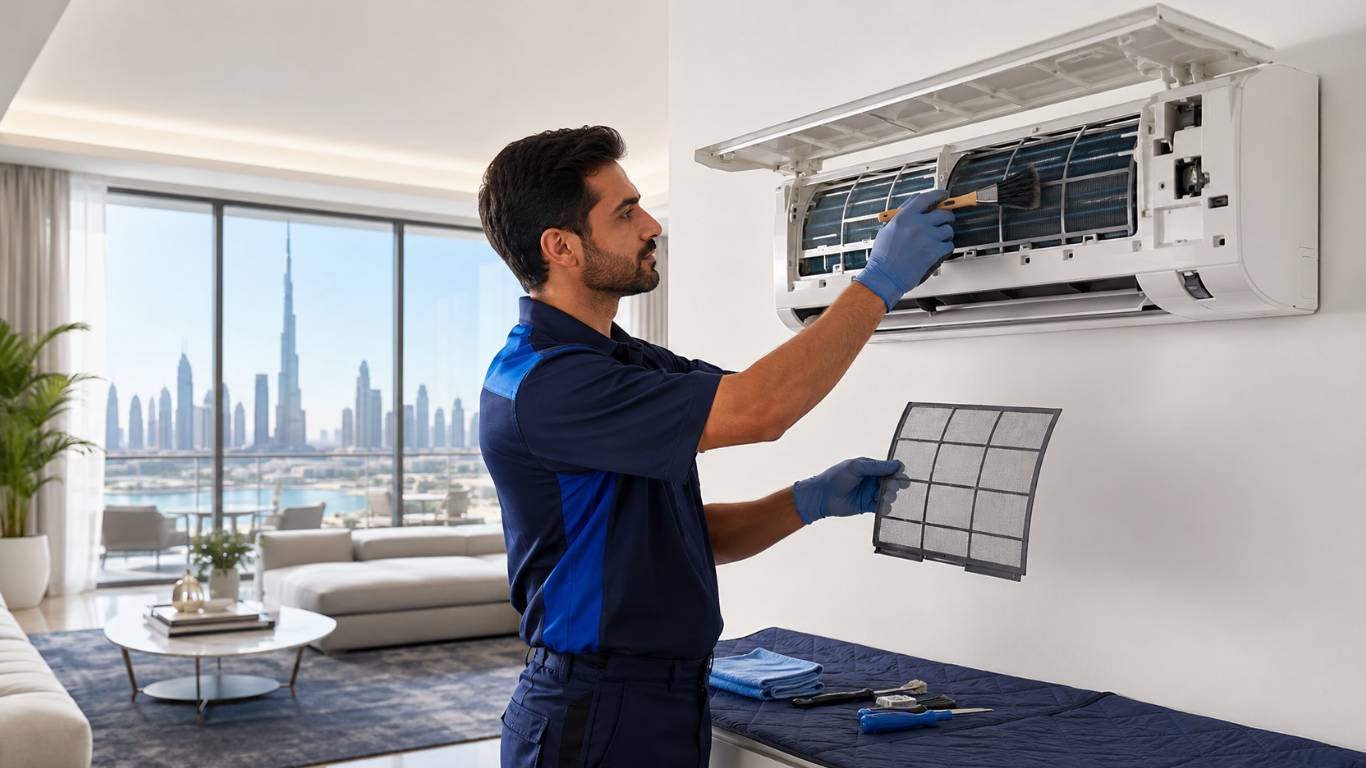
A proper maintenance visit should involve more than washing the filters. The technician should inspect the parts responsible for airflow, drainage, electrical operation, and cooling performance.
Depending on the AC type and condition, the service may include:
- Cleaning or checking the air filters
- Inspecting the evaporator and condenser coils
- Testing indoor and outdoor fan operation
- Clearing and testing the drainage system
- Checking thermostats and temperature sensors
- Inspecting electrical connections and capacitors
- Reviewing refrigerant performance
- Checking copper pipes and insulation
- Listening for unusual compressor or motor noise
The technician should explain any faults found during inspection and distinguish between routine maintenance and repair work.
When Should You Service the AC Earlier?
A scheduled service date should not prevent you from requesting an earlier inspection. Air conditioners often provide warning signs before a larger fault develops. Arrange maintenance if you notice the following:
- Cooling Takes Longer Than Before
If the system needs significantly more time to cool the same room, dirt, restricted airflow, or a cooling-system fault may be affecting performance. - Airflow Has Become Weak
Weak air from the vents may indicate a clogged filter, dirty coil, fan problem, or blockage within the ductwork. - Water Is Dripping From the Indoor Unit
Water leakage may develop because of a blocked drain line, frozen coil, damaged drain tray, or loose drainage connection. - The AC Produces an Unpleasant Smell
Musty smells can develop when moisture and dirt collect inside the indoor unit or drainage system. A burning smell requires immediate attention. - The Unit Makes New or Unusual Noises
Buzzing, rattling, grinding, and repeated clicking can indicate loose parts, motor problems, or electrical faults. - Electricity Consumption Has Increased
A sudden increase in energy use may mean the AC is running for longer because it cannot cool efficiently. The cause should be diagnosed instead of assuming the unit only needs a lower temperature setting.
What Is the Best Time to Service an AC in Dubai?
The most useful time for a detailed AC inspection is before peak summer demand. Servicing the unit before the hottest period allows filters, coils, drainage and electrical components to be checked before the system begins operating for extended hours. However, pre-summer maintenance should not be the only service a heavily used unit receives. A follow-up inspection later in the year may be necessary, especially if cooling performance changes.
Planning can also make it easier to arrange service at a convenient time rather than during an unexpected breakdown.
Can Homeowners Perform AC Maintenance Themselves?
Homeowners can complete several basic checks, but they should not attempt electrical, refrigerant or internal mechanical work. Safe routine tasks include cleaning accessible filters, removing objects blocking vents and keeping the outdoor unit’s surrounding area clear. You can also check for visible water leakage, ice and unusual sounds.
Do not remove electrical panels, handle refrigerant pipes, test capacitors or dismantle fan motors. These components require appropriate tools and technical knowledge. Professional maintenance is especially important when the unit has stopped cooling, repeatedly trips power or develops a refrigerant or electrical fault.
What Happens When AC Maintenance Is Delayed?
Skipping maintenance does not always cause immediate failure, but it can gradually reduce cooling performance. Dust restricts airflow, drainage lines become blocked and worn components continue operating without inspection. Delayed maintenance may lead to:
- Longer cooling cycles
- Higher electricity consumption
- Repeated water leakage
- Frozen evaporator coils
- Weak or inconsistent airflow
- Unpleasant indoor smells
- Additional wear on motors and compressors
- Unexpected breakdowns during hot weather
A neglected unit may also require more extensive cleaning or repair than one maintained on a regular schedule.
Maintenance and Repair Are Not the Same
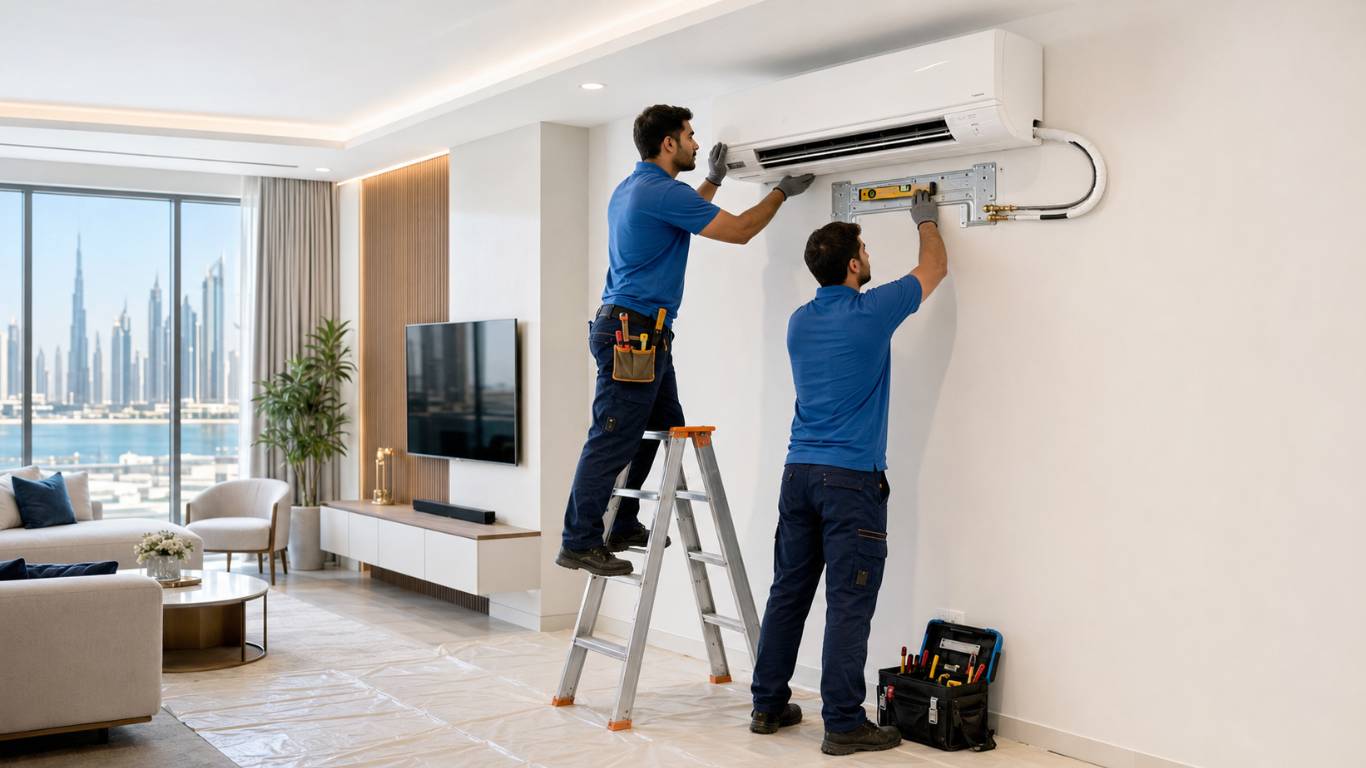
Routine maintenance is intended to clean, inspect and test a functioning AC system. Repair is required when a specific component has failed, become damaged or stopped operating correctly. For example, cleaning a dirty drain line is maintenance when performed before it blocks completely. Repair may be necessary if the blockage has already caused water to damage the drain tray, pump or nearby electrical parts.
Similarly, checking a capacitor is part of maintenance, while replacing a failed capacitor is a repair. Understanding this difference helps customers know what to expect from the service visit. If your system has developed poor cooling, repeated leakage or electrical problems, arrange an AC maintenance service in Dubai that includes proper fault diagnosis rather than basic filter cleaning alone.
Build an AC Maintenance Schedule That Fits Your Property
There is no single maintenance interval that suits every air conditioner. A lightly used bedroom unit, continuously operating living-room AC, and commercial cooling system all have different demands. For most Dubai homes, professional servicing every three to six months is a practical starting point. Units exposed to heavy dust, long operating hours, or high occupancy may need more frequent attention.
AtoZ Appliances Repair provides professional appliance repair in Dubai for residential and commercial properties. Scheduled inspection can help identify airflow, drainage, electrical, and cooling problems before they develop into inconvenient breakdowns.